

any automotive manufacturers have addressed the needs of their customers by installing locking fuel doors. As a frequently used component on a vehicle, it is critical that the lock itself doesn't fail so the driver can access the fuel tank and adds a level of security for the driver.
Low-grade tooling and metal injection inconsistencies
The fuel door lock manufacturer originally designed the part using aluminium. And once the design entered the first production run at the original foundry, they ran into inconsistent material shrinkage within the conventional tool. There were also problems filling the part—leaving inconsistencies from part-to-part and component failure. Due to poor material choices, as well as the lack of quality engineering, the part was destined to fail and lead the customer to seek out another solution.
That's where Dynacast comes in.
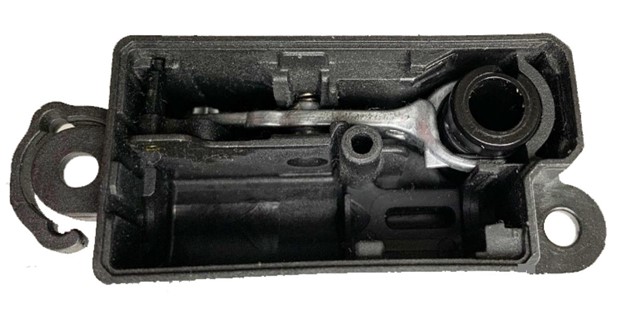
Die Casting vs. Machining
It was clear that not only did the design need updating, but the process needed to be analysed, as well. After reviewing different metalworking processes, the customer narrowed the decision down to machining and die casting. Although precision metal components are achievable through both production processes, the choice often comes down to efficiency and cost.
Dynacast's Multi-Slide machines can be designed with multiple cavities and enable our engineers to cast extremely complex parts, quickly. A faster cycle time contributes to lowered overall cost per piece. Additionally, die cast tools ensure unmatched complexity of internal and external geometries, so there are fewer secondary operations associated with die casting. With the customer deciding on die casting, we were able to get started.
Engineering expertise, software integration, and quality tooling
The first step to eliminating the possibility for part failure was to find an engineering team that provides design for manufacturing (DFM) insight on the front end of the project. Dynacast engineers analysed the design and used software to simulate the casting process, identify gating locations, and optimise the die for quality and longevity. And through the DFM process, our team of engineers identified Zamak 5, or zinc alloy 5, as the optimal casting metal. High strength and exceptional hardness made zinc the ideal alternative to aluminium.
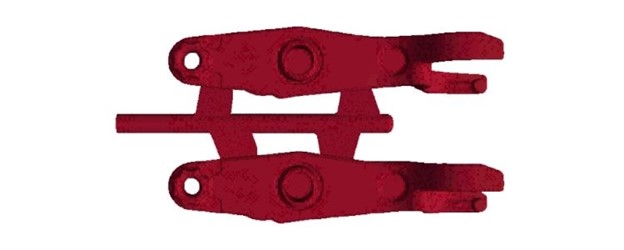
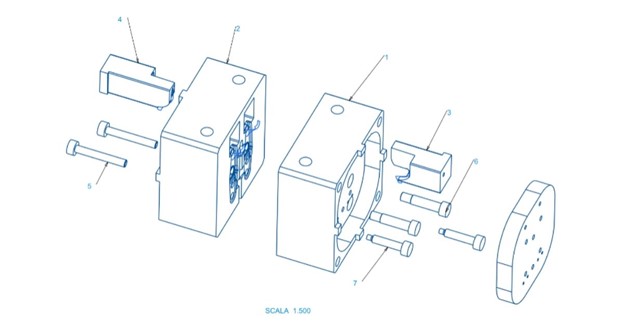
Dynacast engineering experts continued to uncover problems surrounding part failure. The original design presented poor material flow which directly affected the structural integrity of a part. With a well-planned tool design and a carefully controlled process, you can minimise part inconsistencies and achieve higher quality components. In this case, the Dynacast technical team was able to find the perfect gating solution for the part, as well as identify a 2-cavity tooling solution with an insert and interchangeable pins.
The quality tooling Dynacast was able to provide allowed for a much longer tool life that positively impacted the productivity level of the locking fuel door part. And with the large volumes, the customer needed a tool that would hold up over time and create quality components consistently. The Multi-Slide zinc tooling solution that Dynacast engineers provided the customer allowed for much more control and stability during production.
Satisfied customer
Dynacast was able to provide the customer with the overall best solution. The ability to produce high-strength, precision components with quality tools, all while providing lower part prices in a timely manner, allowed Dynacast to secure the project and deliver valued parts.
.svg%3Fwidth%3D24%26height%3D24%26auto%3Dwebp%26fit%3Dsmart&w=128&q=75)
.png%3Fwidth%3D24%26height%3D24%26auto%3Dwebp%26fit%3Dsmart&w=128&q=75)
.svg%3Fwidth%3D24%26height%3D24%26auto%3Dwebp%26fit%3Dsmart&w=128&q=75)