Skip to content

Sub-assembly

A sub-assembly connects small metal components through techniques such as insert moulding and overmoulding.

Speak to an engineer

Insert moulding

Why choose insert moulding?

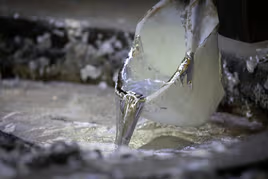
Insert moulding is a manufacturing process in which metal components are placed into a die before molten metal is injected around them to form a finished part. Our proprietary Injected Metal Assembly (IMA) process is a specific type of insert moulding that begins with a custom tool featuring cavities for multiple components. These components are placed into the tool, and molten zinc is injected. The zinc alloy fills the cavities, hardening to create a permanent bond between the components.

Benefits of insert moulding and Injected Metal Assembly:

  • Strengthened structure:
  • Reduced assembly requirements
  • Complex geometries
  • Design flexibility
  • Enhanced aesthetics
  • Common applications of insert moulding:
  • Electronic connectors
  • Medical devices
  • Telecommunications satellites
  • Automotive parts
  • Consumer products

Overmoulding

Key features of overmoulding

The overmoulding process creates a finished product by moulding a softer or more flexible material over rigid metal.

  • Benefits:
  • Reduced assembly requirements
  • Enhanced functionality
  • Ergonomic design
  • Enhanced aesthetics
  • Cost savings
  • Common applications:
  • Tool handles
  • Electronic device grips
  • Medical devices
  • Automotive interior components

What is sub-assembly?

Sub-assemblies, such as insert moulding and overmoulding, integrate components directly into moulds during production to create parts with strengthened structures, reduced assembly requirements, and the ability to achieve complex designs. This streamlined approach improves production timelines and cost efficiency.

View all technologies

What is insert moulding?

In die casting, insert moulding allows a metal component to be placed in a die, with additional molten metal injected around the metal insert to create a finished part. This eliminates the need for secondary operations such as welding, tapping and machining.

Injected Metal Assembly (IMA) process

This proprietary manufacturing process joins multiple components by injecting molten zinc into a die holding the parts, creating a single, permanently bonded unit.

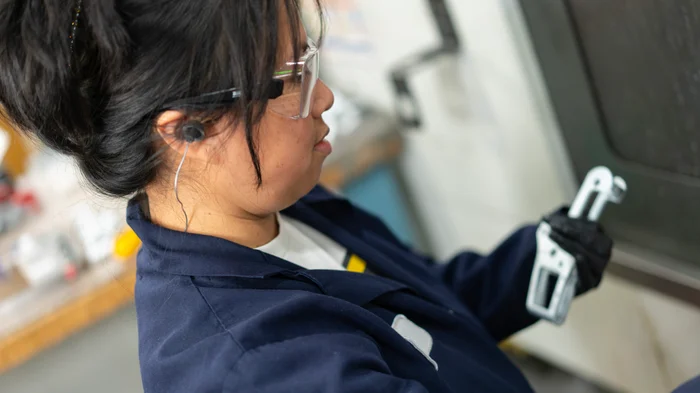
A woman performing a die casting sub assembly

What is overmoulding?

Overmoulding involves moulding one material (often a softer or more flexible material) over another material (usually a rigid substrate) to create a finished product. This is typically used for cosmetic, texture or durability purposes.

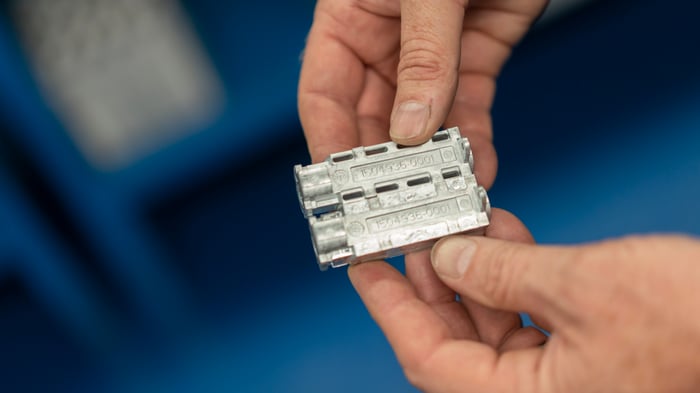
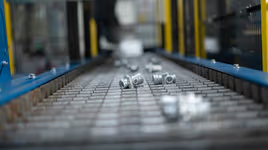
Die cast metal part after sub assembly process

Strengthening sub-assemblies with insert moulding and overmoulding

Sub-assemblies provide an efficient method for combining multiple metal parts into one integrated unit, streamlining production.

Global reach, local expertise

Use our location finder to see which of our global facilities offers the processes and materials you need.

Global locations

Interested in starting your die casting project?

Our engineers are here to answer your questions and show you how innovative die casting technologies can revolutionize your next project.

Contact Us