Skip to content

Conventional die casting

Conventional die casting, also known as high-pressure die casting, is a widely used metalworking process that uses a two-part die to produce high-volume, complex metal parts.
Speak to an engineer

Benefits

Why choose conventional die casting?

Our range of materials compatible with conventional die casting includes:

  • High-speed production
  • Lower tooling costs
  • Dimensional accuracy
  • Improved surface finish
  • Larger part size
  • Fewer secondary operations
  • Part-to-part repeatability
  • High production volume
  • Part consolidation

Key features

Conventional die casting key features

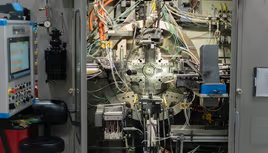
Key features of our conventional die casting machines include:

  • Part range: 5 grams to several kilograms
  • Tonnage range: 60-580T
  • Equipped with thrusters
  • Flexible crosshead adapter systems
  • Fast pneumatic injection systems

Compatible materials

Choose your conventional die casting materials

Our range of materials compatible with conventional die casting includes:

  • Aluminium
  • Magnesium
  • Zinc

What is conventional die casting?

Conventional die casting is an effective technique for manufacturing complex metal parts in high volumes. It delivers exceptional speed and precision, enabling the production of intricate components with consistent quality. This method excels at mass-producing consistent, high-quality parts from metals such as aluminium, magnesium and zinc.

See all technologies

Inside the conventional process

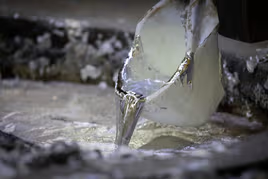
Molten metal is forced under high pressure into a reusable two-part steel die, where it rapidly cools and solidifies, taking the exact shape of the cavity. This process is used in both hot- and cold-chamber machines.

Metal die casted parts stacked in a shipping container

Conventional versus Multi-Slide die casting

Conventional die casting uses a two-part die design, making it ideal for high-volume production of larger parts. Multi-Slide die casting, with its complex four-sided tooling, enables highly detailed components. The key difference lies in the die itself—with conventional die casting prioritising speed and Multi-Slide die casting focusing on intricate features.

Enhancing die longevity

Conventional die casting uses a two-part die, which is inherently less complex than a Multi-Slide die with its multiple moving slides and mechanisms. This simpler design reduces wear and tear on die components.

Global reach, local expertise

Use our location finder to see which of our global facilities offers the processes and materials you need.

Global locations

Interested in starting your die casting project?

Our engineers are here to answer your questions and show you how innovative die casting technologies can revolutionize your next project.

Contact Us